CED—2026

International scientific conference on economic development and legacy of Simon Kuznets

October 29, 2026

Simon Kuznets Kharkiv National University of Economics.

Roundtable
"A Rebooting World: Sustainability, Innovation, and New Development Trajectories"

Information

On October 29, 2026, the annual International Scientific Conference "Economic Development and the Legacy of Simon Kuznets" will be held at Simon Kuznets Kharkiv National University of Economics.


The conference will be held in the form of a roundtable discussion
"A Rebooting World: Sustainability, Innovation, and New Development Trajectories" in a mixed (offline/online) mode.

The conference seeks to actualize the scientific legacy of
S. Kuznets, the 1971 Nobel Prize winner in economics, a theorist of development economics who, as an advisor to many governments, took an active part in developing effective models of their economic policies.

The event mission is to create a platform where economists and representatives of academic, governmental and private institutions can present their research findings, exchange ideas and share information in a collegial environment. Eminent scholars and practitioners from around the world gather to present, discuss and exchange valuable information in the fields of economics, business, education and social sciences.

We invite you to follow this opportunity to gain international insight and perspective on global issues.


Organizing Committee


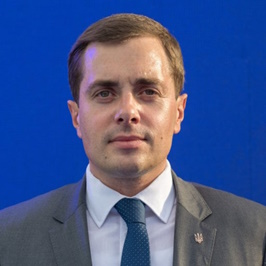
Mykola
TROFYMENKO

Deputy Minister of Education and Science of Ukraine (Ukraine)

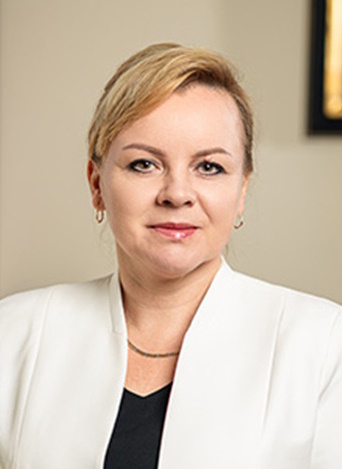
Tetyana
SHTAL

Rector of Simon Kuznets Kharkiv National University of Economics, Doctor of Economics, Professor (Ukraine)

Vasyl
KREMEN

Honorary President of the National Academy of Educational Sciences of Ukraine, Academician of the National Academy of Sciences of Ukraine (Ukraine)

Volodymyr
PONOMARENKO

Chairman of the Academic Council, Full member (Academician) of the National Academy of Pedagogical Sciences of Ukraine (Ukraine)

Tetiana
EHOROVA-LUTSENKO

Head of Kharkiv Regional Council (Ukraine)

Ihor
TEREKHOV

Kharkiv Mayor (Ukraine)

Ľuboš
CIBÀK

Rector of Bratislava University of Economics and Management (Slovakia)

Miglena
TEMELKOVA

Rector of the University of Telecommunications and Post (Bulgaria)

Beata
REJMAN

Rector of State University of Applied Sciences in Jaroslaw (Poland)

Inga
ŽALĖNIENĖ

Rector, Mykolas Romeris University (Lithuania)

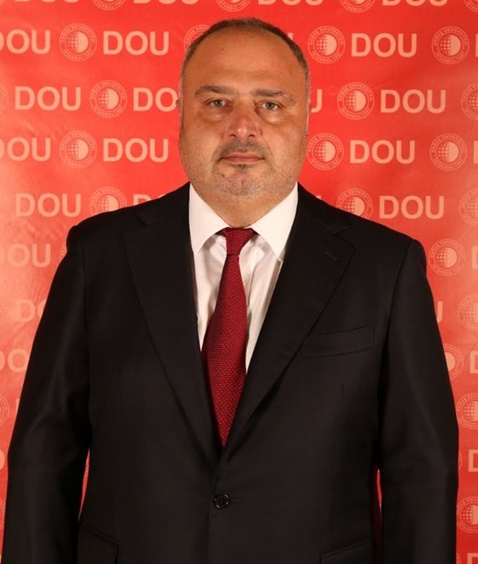
Ahmet Alkan
ÇELİK

Rector of Doğuş University (Turkey)

Mirosław
CHOLEWIŃSKI

Rector of Jansky University in Lomza (Poland)

Doutor José Bragança
MIRANDA

Rector of Lusophone University (Portugal)

Vasyl
OTENKO

Vice-Rector of Simon Kuznets Kharkiv National University of Economics (Ukraine)

Vitalina
BABENKO

Vice-Rector for research and international cooperation, Simon Kuznets Kharkiv National University of Economics (Ukraine)

Olena
RAYEVNYEVA

Head of Statistics and Economic Forecasting Department, Simon Kuznets Kharkiv National University of Economics (Ukraine)

Program Committee

Jean TIROLE

PhD., Professor, Honorary Chairman, Fondation Jean-Jacques Laffont/Toulouse Sciences Economiques (TSE), Honorary Chairman, Executive Committee, Institute for Advanced Study in Toulouse (IAST), the 2014 Sveriges Riksbank prize in economic sciences in memory of Alfred Nobel. (France)

Howard J. SHATZ

PhD. in Public Policy, Senior Economist, RAND Corporation; Professor of Policy Analysis, Pardee RAND Graduate School (USA)

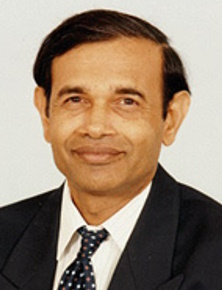
Lakhmi C. Jain

PhD, Dr. h.c., Professor, Fellow (Engineers Australia), Founder of the KES International (Australia)

Christopher Mark DAVIS

Professorial Fellow, Oxford Institute of Population Ageing (United Kingdom)

Juergen KAEHLER

Professor of Economics, University of Erlangen-Nuremberg (Germany)

Emmanuel K. BOON

Professor and Director of International Affairs, International Centre for Enterprise and Sustainable Development (ICED) (Ghana)

Jan-Urban SANDAL

Dr., Rector and owner of Fil. Dr. Jan-U. Sandal Institute, Chair of Chernivtsi Schumpeter Centre for Economic Research, Honorary Professor of Chernihiv National University of Technology (Norway)

Emmanuelle AURIOL

Professor of Economics, TSE Research Faculty, Toulouse School of Economics (France)

Ryszard PUKAŁA

Vice-Rector for Student Affairs at State University of Applied Sciences in Jarosław (Poland)

Stanislav FILIP

PhD, Bratislava University of Economics and Management (Slovakia)

Mariana PETROVA

Prof. Dr., Director of Education Technologies Center, St. Cyril and St. Methodius University of Veliko Turnovo (Bulgaria)

Jean-Hugues CHAUCHAT

Dr., Professor, Honoured Professor of University Lumiere, Lyon 2, Honoured Professor of S. Kuznets KhNU of Economics. (France)

Leonid MELNIK

Doctor of Science in Economics, Professor, Director of Scientific Research Institute of Development Economics, Ministry of Education and Science and National Academy of Science of Ukraine. Honoured Worker of Science and Technology of Ukraine (Ukraine)

Ali ARNAOUT

Dr., Prof., Professor and Programme Director for International Management at Wismar University, Managing Director of the German Travel Security Fund (Germany)

Margarethe ÜBERWIMMER

FH‑Prof. DI Dr., Head of degree programmes Global Sales and Marketing (Bachelor and Master), Head of research area Global Business Management at Upper Austria University of Applied Sciences (Austria)

Rui Carlos ESTRELA

PhD in Information Sciences, Faculty of Communications, Pontifical University of Salamanca, Associate Professor, Lusófona University (Portugal)

Paul SEABRIGHT

D.Phil, Professor of Economics, Toulouse School of Economics (France)

Kevin O'ROURKE

Doctor of Economics honoris causa, Professor of Economics, New York University Abu Dhabi (United Arab Emirates)

Sultan RAMAZANOV

Professor, Doctor of Science, Engineering, Doctor of Science, Economics, Academician of Science and Technology of Ukraine (Ukraine)

Mikuláš SIDAK

Doctor scientiarum, Professor, Vice-Rector for Science and Research at Bratislava University of Economics and Management (Slovak Republic)

Tetiana CHECHETOVA-TERASHVILI

Deputy Mayor, Manager of the Executive Committee of Kharkiv City Council (Ukraine)

Nadiia PROSKURNINA

Doctor of Science in Economics, Professor, Head of International Economics and Management Department, Simon Kuznets Kharkiv National University of Economics (Ukraine)

Ivan MIKHIEIEV

PhD, associate professor, department of cyber security and information technologies, Simon Kuznets Kharkiv National University of Economics (Ukraine)

Kostyantyn STRYZHYCHENKO

Doctor of Science in Economics, Professor of the Department of Statistics and Economic forecasting of the Simon Kuznets Kharkiv National University of Economics (Ukraine)

Areas of discussion:

1. The Opportunity Economy: Growth Models in the New World.

2. Universities of the Future: Knowledge, Talent, and Global Mobility Ecosystems.

3. 21st-Century Social Landscapes: Well-being, Equity, Inclusion.

4. Digital Worlds and Smart Technologies: From Data to Solutions.

Сonference speakers:

Beata JAVORCIK

PhD in Economics, Chief Economist of the European Bank for Reconstruction and Development, Professor of Economics at the University of Oxford, member of the Scientific Advisory Board of the ifo Institute (University of Munich), and of the Executive and Supervisory Committees of CERGE-EI in Prague (Poland)

Beata Javorcik is the Chief Economist of the European Bank for Reconstruction and Development (EBRD). She serves on the Bank’s Executive Committee and advises the President and other members of the senior management on economic matters of strategic or operational importance to the EBRD’s regions of operations. She provides thought leadership, both internally and externally, on economic issues related to the EBRD’s activities in its countries of operations.


The Office of the Chief Economist (OCE), led by Beata Javorcik, conducts and provides original research, representing the Bank at high-level external policy and academic conferences and seminars. It publishes in both academic and non-academic outlets and maintains close ties between the EBRD and the academic community. She also shapes a research agenda that keeps the EBRD at the forefront of understanding the economic and strategic challenges in its regions of operation, thereby fostering the development of effective policy solutions. The Office is also responsible for macroeconomic forecasting. It contributes to the work of the Bank’s risk management department, specifically by developing scenarios for risk identification, mitigation, and stress testing.


Professor Javorcik is currently on leave from the University of Oxford, where she holds a statutory professorship in economics (being the first female to hold this position) and is a Fellow of All Souls College. She is a member of the Scientific Advisory Board of the Ifo Institute at the University of Munich, as well as the Executive and Supervisory Committees of CERGE-EI in Prague.


Before joining the University of Oxford, Professor Javorcik worked at the World Bank in Washington, D.C., where she engaged in research, lending operations, and policy advice. Professor Javorcik specializes in international trade. Her research interests include the determinants and effects of foreign direct investment inflows, the impact of services liberalization, the evaluation of investment promotion programs, the transmission of shocks through production networks, and import duty evasion. Her research findings have been published in the American Economic Review, Journal of the European Economic Association, Review of Economics and Statistics, European Economic Review, Economic Journal, Journal of International Economics та Journal of Development Economics.

Howard J. SHATZ

PhD. in Public Policy, Senior Economist, RAND Corporation;
Professor of Policy Analysis, RAND School of Public Policy (USA)

Dr. Howard J. Shatz specializes in international economics and economics and national security. His RAND research has included economic issues related to Russia’s 2022 full-scale invasion of Ukraine; economic competition and the U.S. role in the global economic order; great power competition in the Middle East; the Chinese and Russian economies; China-Israel relations; labor-market reform in Mongolia; the finances and management of the Islamic State and its predecessors; civil service reform, development policies, labor markets, and statistical systems in the Kurdistan Region of Iraq; and the development of socio-economic strategy by governments.


From 2007 to 2008, he was on leave from RAND, serving as a senior economist at the U.S. President’s Council of Economic Advisers.


Dr. Howard J. Shatz has written journal articles, book chapters, and policy reports on trade and labor markets, exchange rates and economic performance, the geography of international investment, services trade, and trade barriers and low-income countries.


Before joining RAND, he was a research fellow at the Public Policy Institute of California, focusing on California and the global economy. Dr. Howard J. Shatz has held research fellowships at the Brookings Institution and the Board of Governors of the Federal Reserve and has worked as a consultant to the World Bank and on advisory projects for Latin America, Africa, and South Asia countries. He holds a PhD. in public policy from Harvard University.

Volodymyr PONOMARENKO

Doctor of Science in Economics, Professor, Honored Worker of Science and Technology of Ukraine, Cavalier of the Orden of Merit, III, II degrees, “Orden of Prince Yaroslav the Wise” V degree, Full member (Academician) of the Academy of Pedagogical Sciences of Ukraine. (Ukraine)

Volodymyr Ponomarenko investigates the problems of strategic enterprise management, simulation modeling, reforming higher economic education, training competent specialists, and the use of information technologies in education. In the 1970s, he was one of the pioneers of simulation modeling in the USSR. He is author of about 400 scientific works, in particular, more than 100 monographs and about 50 training manuals. Under the scientific leadership of Volodymyr Ponomarenko, strategic programs for the development of the Kharkiv region until 2011, until 2015 and until 2020 were developed.


He is head of the scientific school "Development of strategic management systems of an industrial enterprise" of Simon Kuznets Kharkiv National University of Economics. His key publications include the following monographs: Problèmes de formation des économistes et managers compétents en Ukraine, Розвиток вищої освіти в Україні: аспекти менеджменту та маркетингу, Some problems of the education system in Ukraine: analytics, Conceptual and model support for the development of an innovative-active university.

Mark J. BRANDT

Ph.D. in Psychology, Professor of Political Psychology at Tilburg University (Netherlands)

Mark J. Brandt specializes in political and social psychology, with a particular focus on ideological conflict and belief systems. His research examines the causes and consequences of political, religious, and moral attitudes, as well as the psychological mechanisms that may reduce social polarization and foster more tolerant societies. Dr. Brandt’s work provides insights into how threats and life crises shape the stability or transformation of individuals’ political preferences, and how these dynamics inform broader theories of political attitudes and societal responses to large scale crises.
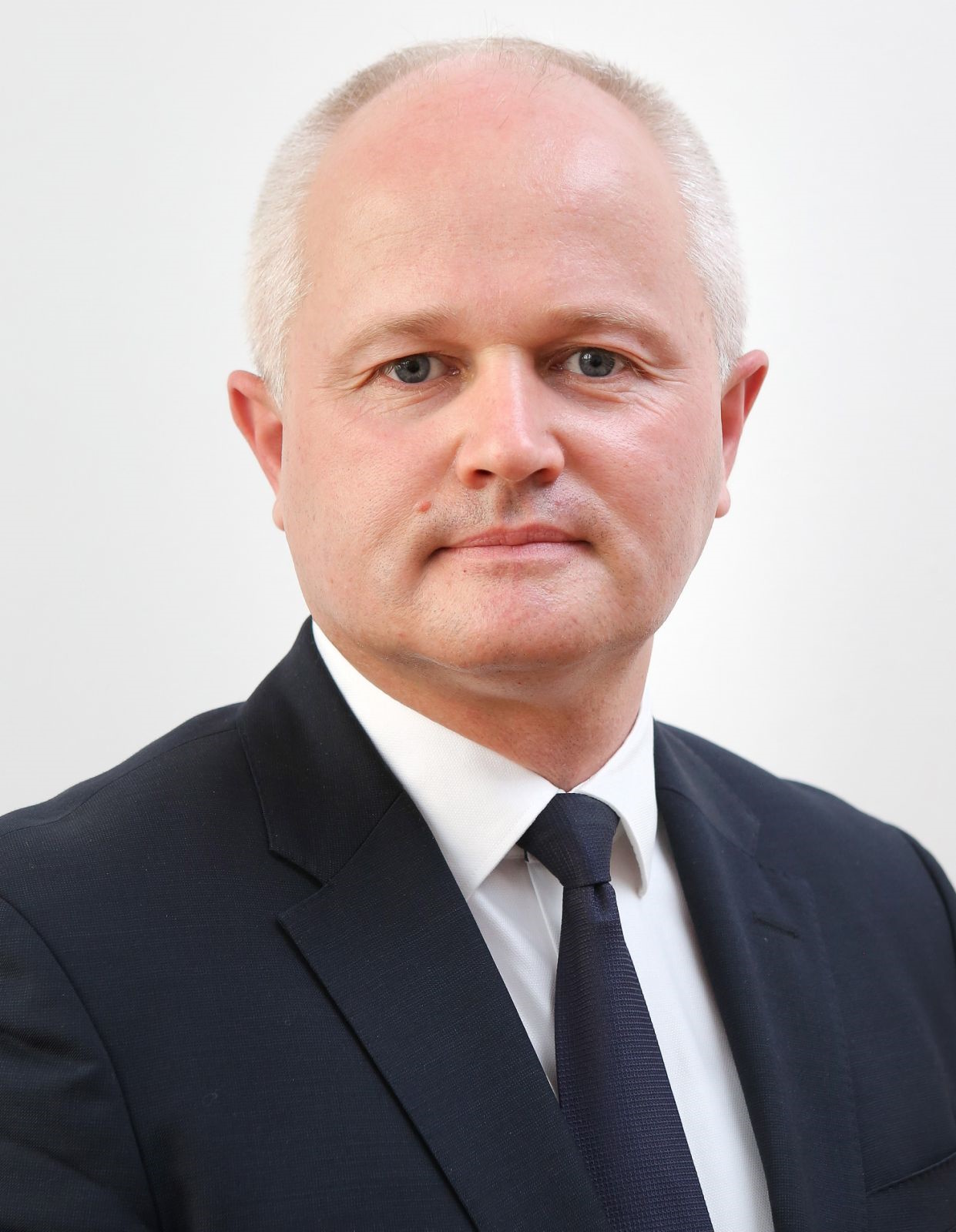

Dr. Brandt is currently a Professor in the Department of Social Psychology at Tilburg University.

Roland BOUFFANAIS

Ph.D., Associate Professor at the Global Studies Institute and the Department of Computer Science of the University of Geneva; Chair in Computational Diplomacy and Co-Director of SiDLab (Switzerland)

Dr. Roland Bouffanais specializes in complexity science, computational diplomacy, artificial intelligence, and multi agent systems. His research at the University of Geneva and within the Applied Complexity Group (ACG), which he leads, addresses interdisciplinary questions at the intersection of computer science, the social sciences, and AI. In recent years, his work has focused on applying AI methods and complexity based approaches to challenges in international relations and diplomatic practice. Dr. Bouffanais investigates issues related to social contagion, collective decision making, and the dynamics of human behavior.


He serves as Director of the Department of Computer Science (Faculty of Science) at the University of Geneva and is Co Director of the Science Diplomacy Laboratory (SiDLab), jointly operated with ETH Zürich.


Dr. Bouffanais has authored numerous journal articles, book chapters, and scientific reports on swarm intelligence, network theory, AI ethics, complex urban systems, and modeling human behavior in crisis situations. His research integrates theoretical and computational developments with experimental validation in real world environments.


He has participated in multiple international projects, collaborated with governmental agencies and transnational companies, and is a member of the Editorial Board of Scientific Reports, published by Nature.

Conference program:

October 29, 2026.

9.20 – 9.50 – Offline registration of conference participants (New building lobby);
9.40 – 9.50 – Joining of online conference participants (Zoom meeting);
9.50 – 10.00 – Opening of the conference, welcome address by Tetyana Shtal, Rector of S. Kuznets Kharkiv National University of Economics (Secure location, Zoom meeting);
10.00 – 10.40 – Presentation by Dr. Beata Javorcik, Professor, Chief Economist of the EBRD «Sanctions and the Shifting Landscape of International Trade» (Secure location, Zoom meeting);
10.40 – 11.00 – Presentation by Dr. Howard J. Schatz, Professor of Policy Analysis, RAND School of Public Policy « » (Secure location, Zoom meeting);
11.00 – 11.20 – Presentation by Dr. Volodymyr Ponomarenko, Professor at SK KhNEU «The University as a Hub of Culture, Research, and Education» (Secure location, Zoom meeting);
11.20 – 11.40 – Presentation by Dr. Mark J. Brandt, Professor of Political Psychology at Tilburg University «Mapping the Belief System Landscape» (Secure location, Zoom meeting);
11.40 – 12.00 – Presentation by Prof. Roland Bouffanais, Global Studies Institute at University of Geneva, Co-Director SiDLab (Secure location, Zoom meeting);
12.00 – 13.00 – Break;
13.00 – 17.00 – Presentations by conference participants, discussions (Secure locations, Zoom meeting);
17.05 – 17.30 – Conference closing ceremony (Secure location, Zoom meeting).

Important dates


August 1 – October 25, 2026– registration for participation in the conference.

Registration form


September 1 – October 20, 2026 – Information on the presentations and subject areas of keynote speakers;
September 15 – October 27, 2026 – Familiarizing participants with the presentations of keynote speakers and sending questions to promote dialogue at the conference; submission of presentations by participants in the discussion areas (skced2026@hneu.net).

Presentations of the participants of the Round Table 2026

Conference participants certificates

Video recording of the Plenary session

REQUIREMENTS FOR PUBLISHING
THE ROUNDTABLE RESULTS

Сonference papers will be published in:


1. The book “Digital Transformation in Economic Development” will be published by Springer". The volume will feature the selected papers presented at the CED 2026 conference, focusing on digital transformation, economic development, innovation, and related research areas. For further details, please visit the link.


2. The Journals “Development Management”(Category B – List of scientific professional publications of Ukraine).


The article should have no more than 5 authors, one of whom is a foreign researcher. In order to publish research findings among the world scientific community, the recommended language of the article is English. Authors should send the full text of the article to the e-mail address of the editorial board of the Journal «Development management» until October 30, 2026.


Publication of articles is free of charge.

Requirements for articles in the Journal “Development Management”:

1) Article length – from 4,000 words;

2) Information and article requirements.

3. Abstracts in the Journal “Youth Economic Bulletin of S. Kuznets KhNEU”, the issue of which is devoted to the conference proceedings.


Authors should send the full text of abstracts to the email address of the Journal editorial office (md@hneu.net) y October 25, 2026. After editing, payment details will be sent to authors.

Archive 2025: Round table "Global Cooperation and Development Transformations: Challenges, Prospects, Innovations"


Areas of discussion:

1. Economic Development in a Vulnerable World;

2. Higher Education in the Context of Sustainable Development Goals: Challenges and Expectations;

3. Social Economy and Social Development Priorities;

4. Academic Freedom and Inclusion in the Digital Age.

Keynote speakers CED-2025

Presentations of the participants of the Round Table 2025

Conference participants certificates

Video recording of the Plenary session


Archive 2024: Round table "Global Transformations and Sustainable Development: Cooperation, Science, Education, Technologies"


Areas of discussion:

1. Economic Development in the Face of Multidimensional Uncertainty;

2. Trends in Education and a New Paradigm for University Development;

3. Dominants of Social Developments of Countries: Current Research;

4. Digital Society and Information Technology.

Keynote speakers - CED-2024

Presentations of the participants of the Round Table 2024

Conference participants certificates

Video recording of the Plenary session


Archive 2023: Round table "A Turbulent World and Prospects for Future Development"


Areas of discussion:

1. Economic Development in the Face of Multidimensional Uncertainty;

2. Trends in Education and a New Paradigm for University Development;

3. Dominants of Social Developments of Countries: Current Research;

4. Digital Society and Information Technology.

Keynote speakers - CED-2023

Presentations of the participants of the Round Table 2023

Conference participants certificates

Video recording of the Plenary session


Archive 2021: Round table "Economic development and sustainable society: challenges and solutions"


Areas of discussion:

1. Economic Challenges of Society Development after COVID-19: Paradigm Shift and New Prospects;

2. Problems and ways to modernize the higher education system: national and international experience;

3. Information society and global digitization.

Certificates for participation in the Round Table

Presentations by the Round Table participants