Dr. Howard J. Shatz specializes in international economics and economics and national security. His RAND research has included economic issues related to Russia’s 2022 full-scale invasion of Ukraine; economic competition and the U.S. role in the global economic order; great power competition in the Middle East; the Chinese and Russian economies; China-Israel relations; labor-market reform in Mongolia; the finances and management of the Islamic State and its predecessors; civil service reform, development policies, labor markets, and statistical systems in the Kurdistan Region of Iraq; and the development of socio-economic strategy by governments.
From 2007 to 2008, he was on leave from RAND, serving as a senior economist at the U.S. President’s Council of Economic Advisers.
Dr. Howard J. Shatz has written journal articles, book chapters, and policy reports on trade and labor markets, exchange rates and economic performance, the geography of international investment, services trade, and trade barriers and low-income countries.
Before joining RAND, he was a research fellow at the Public Policy Institute of California, focusing on California and the global economy. Dr. Howard J. Shatz has held research fellowships at the Brookings Institution and the Board of Governors of the Federal Reserve and has worked as a consultant to the World Bank and on advisory projects for Latin America, Africa, and South Asia countries. He holds a PhD. in public policy from Harvard University.
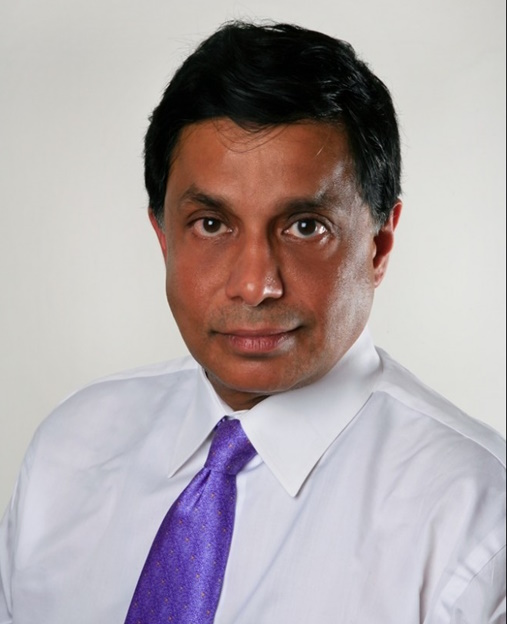
Ramu Damodaran is the Deputy Permanent Observer of the intergovernmental University for Peace mission to the United Nations. In his international civil service career, he served as the first Director of the United Nations Academic Impact initiative from 2010 to 2021 and also served as secretary of the United Nations General Assembly’s Committee on Information from 2011.
His thirty-three-year association with the United Nations began as a delegate of India and then with Secretariat assignments, including the Departments of Special Political Questions, Peacekeeping, Global Communications, as well as the Executive Office of the Secretary-General.
As a member of the Indian Foreign Service, where he was promoted to the rank of Ambassador, he served as Executive Assistant to the Prime Minister of India between 1991 and 1994.
He is a Senior Fellow at the Centre for Social and Economic Progress in New Delhi, India, and a member of the Leadership Council of the Sustainable Development Solutions Network and of the Board of Directors of the New York chapter of the United Nations Association of the United States.

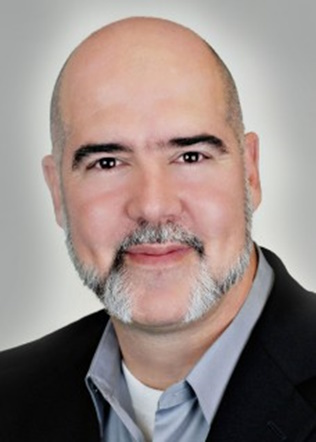
Teaches economics at the Toulouse School of Economics in France since 2000. He was Director from 2012 to 2021 of the Institute for Advanced Study in Toulouse (IAST). He is a Fellow of the Centre for Economic Policy Research, London, and of the European Economic Association. He was formerly a member of the Economic Advisory Group on Competition Policy at DG-Competition of the European Commission and a member of the Scientific Council of the think-tank BRUEGEL. Since 2005 he has been an almost annual visitor at the Santa Fe Institute in Santa Fe, New Mexico. From October 2021 to September 2023, he completed a two-year internship and was a Fellow at All Souls College, Oxford.
His current research lies in three areas of microeconomics: industrial organization and competition policy; the economics of networks and the digital society; and behavioral economics (especially the integration of evolutionary biology and anthropology with an understanding of the development of economic institutions in the very long run). Under contract with Princeton University Press, in 2024 he published a book titled “The Origins of Enchantment: How Religions Compete”.

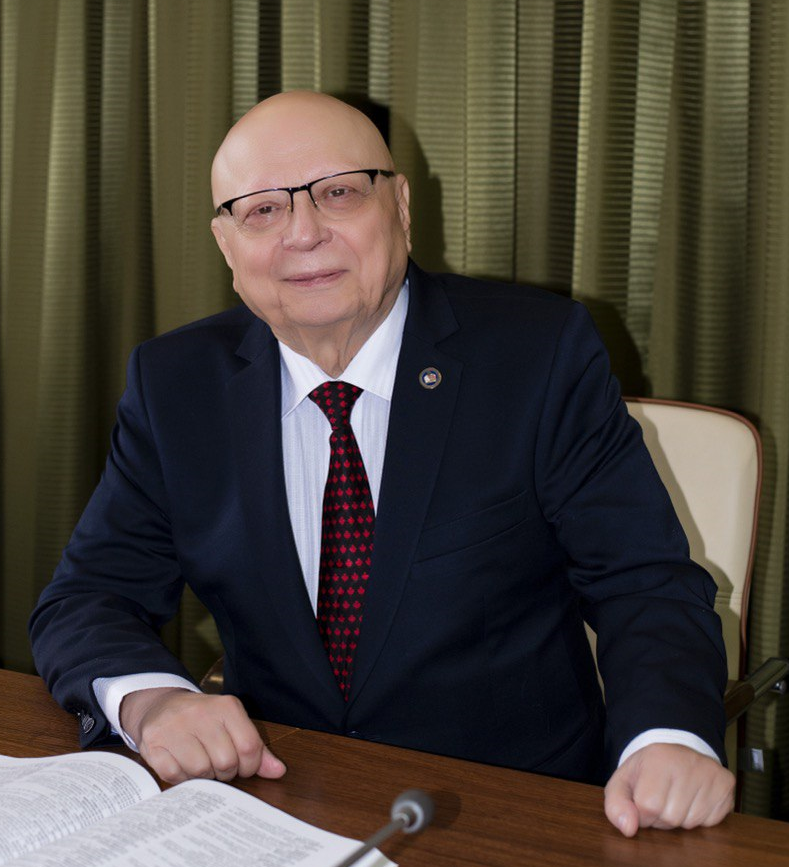
Volodymyr Ponomarenko investigates the problems of strategic enterprise management, simulation modeling, reforming higher economic education, training competent specialists, and the use of information technologies in education. In the 1970s, he was one of the pioneers of simulation modeling in the USSR. He is author of about 400 scientific works, in particular, more than 100 monographs and about 50 training manuals. Under the scientific leadership of Volodymyr Ponomarenko, strategic programs for the development of the Kharkiv region until 2011, until 2015 and until 2020 were developed.
He is head of the scientific school "Development of strategic management systems of an industrial enterprise" of Simon Kuznets Kharkiv National University of Economics. His key publications include the following monographs: Problèmes de formation des économistes et managers compétents en Ukraine, Розвиток вищої освіти в Україні: аспекти менеджменту та маркетингу, Some problems of the education system in Ukraine: analytics, Conceptual and model support for the development of an innovative-active university.

Richard Griffith is a tenured Professor in the Industrial/Organizational (I/O) Psychology Program and the Executive Director of The Institute for Culture, Collaboration, and Management at the Florida Institute of Technology, a partner in the Erasmus Mundus Work and Organizational Psychology consortium. Dr. Griffith also serves as the Culture Research Portfolio Manager. Dr. Griffith provides more than 20 years of expertise in talent management research and consulting. He is the author of over 150 publications, presentations, and book chapters and has conducted funded research for the Department of Defense examining the assessment and development of cross-cultural competence.
Dr. Griffith is the founder of the Ph.D. program at Florida Tech, including the international concentration, the first in the U.S. In addition, he is the editor of the books Internationalizing the Organizational Psychology Curriculum, Critical Issues in Cross Cultural Management, and Leading Global Teams. He has served as a guest editor of the journals Human Performance and Organizational Development and associate editor of the European Journal of Psychological Assessment. He has been recognized as a Fellow by the International Association of Applied Psychology (IAAP), the Society for Industrial Organizational Psychology (SIOP), and as a Senior Research Fellow by the Army Research Institute. His work has been featured in Time magazine and The Wall Street Journal.
Currently Dr. Griffith is conducting research on the development and validation of measures of cross-cultural competence, and research and development on a technological solution to optimize experiential learning called Guided Mindfulness.

He chairs the Commission of Health, Social, and Labour Affairs. He is also President of a Parents Association, General Administrator of the NGO O Companheiro, and serves in several international leadership roles, including Deputy Vice President of the T.I.M.E. Association and Steering Committee member of the Magalhães Network.
Rui has coordinated or contributed to over 30 European projects (Erasmus+, Horizon Europe, etc.) and held previous roles as IST’s HR Director, International Affairs Coordinator, and member of key institutional bodies.
He is active in international networks like CESAER and CLUSTER, regularly presenting at global conferences (EAIE, SEFI, FAUBAI, ESOF). Rui holds degrees in Sociology and Statistics and is an experienced trainer in SPSS and survey methodologies, with a background in consulting and teaching.